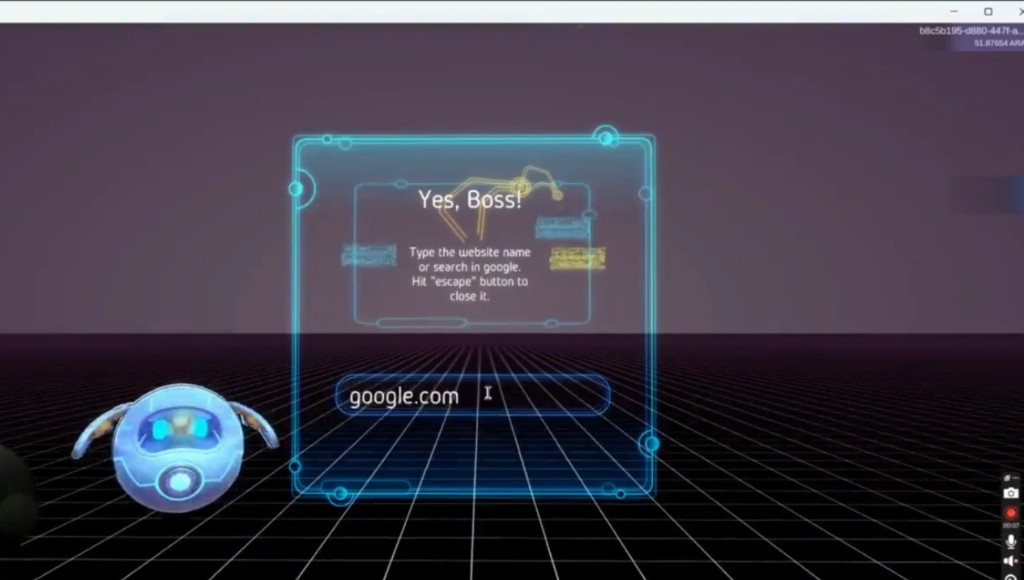
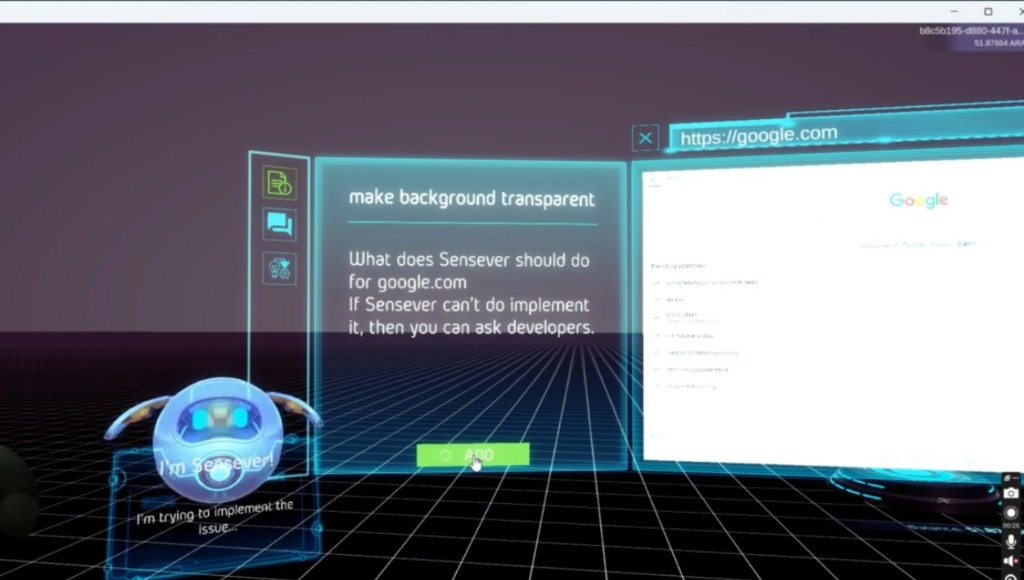
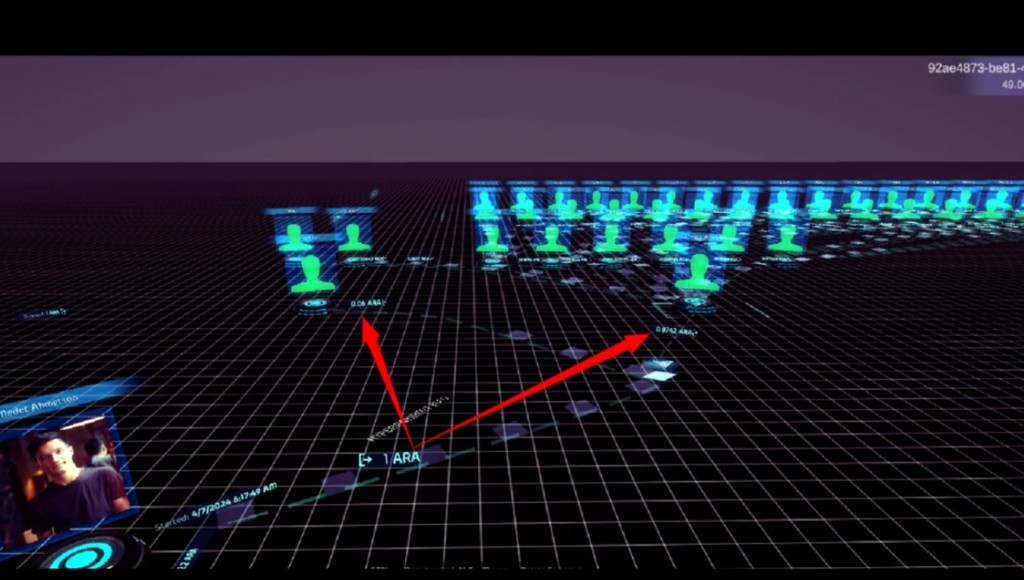
First it was a 3D software environment with AI assistant. The
idea was right but asbtract. 3D space was a desktop app. It
didn't work out because the UI metaphor was not properly built,
and the blockchain side was not ready.
screenshot 1 - 3D environmentscreenshot 2 - 3D environmentscreenshot 3 - 3D environment
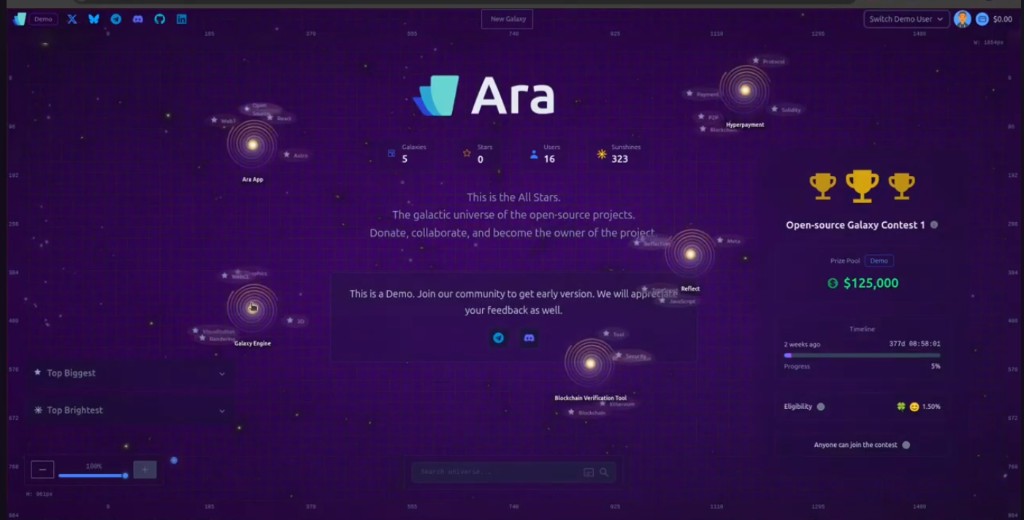
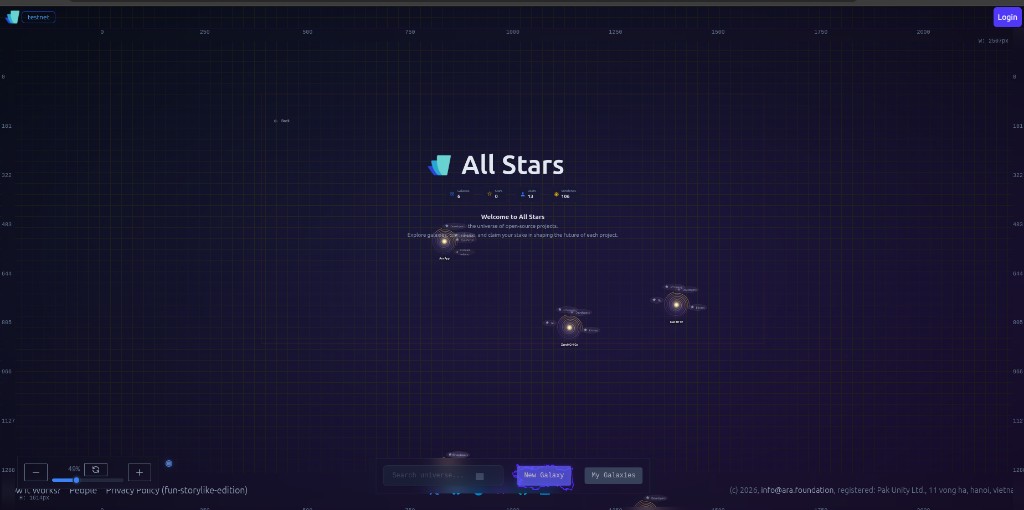
Then it moved to the web to ship faster. It experiment with 2D
new metaphor for malleable interface: instead typography based
component, its like a universe with galaxies (projects) and
stars (users).
screenshot - galaxy interface
The site itself came with meta tools that let you step outside
the page.
screenshot - scrolled version with meta tools visible
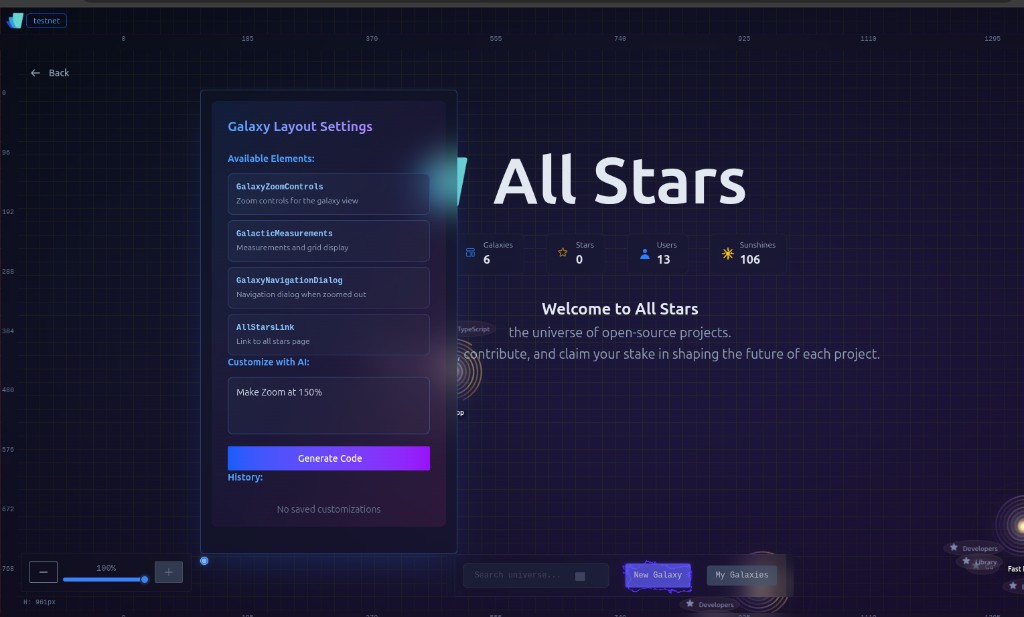
UI is malleable with AI: in screenshot below you can see how to
customize zoom controller with AI.
screenshot - zoom controller
It didn't work out because I was trying to push it as a social
network. Then I tried to work on each of the Ara component and
as only focus on malleable interface was misdirecting
trajectory.
After countless feedbacks I finally get the proper idea and
structure and here we are.
Completed
Whitepaper
- the full framework, published April 2026.
Hyperpayment protocol
- pays money according to semantics, not manual invoicing or
fixed subscriptions.
Malleable interface that people need (draft).
Now
What Is Now
Phase I - Cascade Fund
Active
The first version brings together two communities: users who want
to feel like kings of their computers, and the open source
developers who build the tools they depend on.
Users pay open source projects monthly. In return they choose from
three options:
Prevent features or API deprecation.
Add features to the API that make their lives easier.
Turn the project into Ara.
Turning into Ara has two forms.
Split the interface, data, and logic so personal data stays on
the local side.
Bring open source communities together to create shared
protocols and messages, so apps are aligned with each other.
What users get: a bundle of open source software where features
and APIs are guaranteed not to disappear, all data stays local,
and nothing is locked to a vendor.
To surface what matters, Ara will build an analyzer that reads
what APIs exist and how users actually use them - then suggests
improvements that save time.
Onboards: open source developers and their users
2026-onward
Phase II - Project Management
Coming next
Built on what Cascade Fund proved, the second phase is a project
management environment that runs in the browser.
Local first: all your data stays on your machine. AI ready: the
model runs locally, trained on what you already own. Composable:
apps are Lego bricks built on other apps, reshuffled without
worrying about licenses.
This is the malleable surface. Software you own, not software you
rent.
Onboards: designers, power users, productivity-focused
teams
Phase III - Blockchain
The horizon
The third phase puts the foundation on-chain. Two wings: one that
stores the semantics of open source software, one that runs
recommendation on top of those semantics.
The blockchain here is not a financial instrument - it is
collective wisdom. A trustless recommendation engine that surfaces
what users actually need, not what someone paid to promote.
And if it succeeds: it whitewashes blockchain from its infamous
reputation.
Onboards: node operators, the broader ecosystem
Join us
Stay updated and collaborate
Lastly, to keep updated follow on our social media. Or if you want
to collaborate mail me at
medet@ara.foundation.